
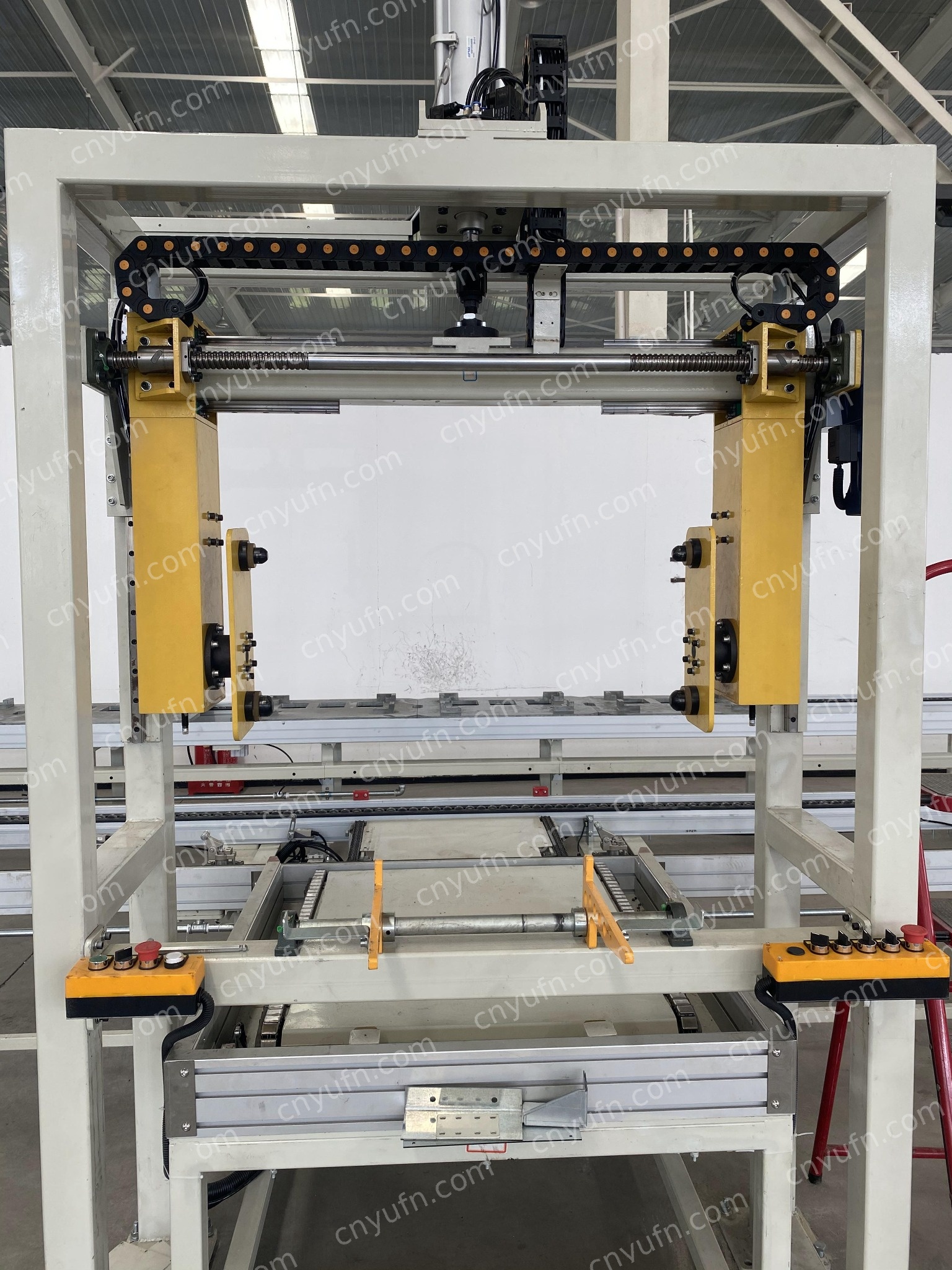
The vacuum circuit breaker is the core element of a 12 kV medium-voltage switchgear panel, and its assembly quality determines the interrupting capability and operational safety of the entire panel. Taizhou Yufeng Intelligent Equipment Co., Ltd. designed this VCB production line to organize chassis truck assembly, vacuum interrupter pole assembly, mechanical characteristic testing and final factory tests into a flow line with clear cycle time and full data traceability. The line solves three problems that are common in switchgear workshops: inconsistent manual assembly, scattered inspection records and unstable batch delivery.
Process planning and workstation layout
VCB assembly is best divided into workstations. A typical line is arranged into a chassis truck area, a mechanism and contact arm pre-assembly area, a pole assembly area, a mechanical characteristic test area, a withstand voltage and loop resistance test area, and a packing and off-loading area. Work-in-progress moves between stations on roller conveyors or AGV carts to avoid repeated lifting of large components. The chassis truck is assembled first and checked for positioning. The three-phase vacuum interrupters and insulating cylinders are assembled on dedicated locating fixtures and tightened with torque wrenches to standard torque values, which keeps the opening and closing consistency of the three phases under control.
Key test points
Mechanical characteristic testing is the most important quality control point on a VCB line. The tested items include opening time, closing time, three-phase synchronization, travel, over-travel, bounce time, and opening and closing speed. Our test station collects mechanism action signals, displacement sensor data and coil current curves at the same time, judges pass or fail automatically and generates a report. For non-conforming products, the system lists the problem items so the assembler can locate the rework position quickly. Before shipment, each breaker goes through power frequency withstand voltage testing and contact resistance measurement. The test voltage and duration follow the customer standard, and results are recorded automatically for traceability.
Capacity and cycle time
In a typical configuration, one VCB assembly line produces 30 to 50 units per day with a cycle time of about 8 to 12 minutes per unit. The exact cycle depends on the breaker model, the number of test items and the workstation layout. For factories with multi-model, low-volume production, we reserve changeover space in the design phase and use quick-change fixtures and universal locating pallets to shorten the switchover time between different models.
Why this approach
The value of this production line is not total automation. It is turning the experience of senior workers into standard work instructions, inspection standards and mistake-proofing devices. Any new employee can complete the assembly to standard after short training, and test data is uploaded in real time. Managers can view daily output, the distribution of defects and rework reasons at any moment. For switchgear companies preparing for export orders or customer factory audits, such a line directly demonstrates production capacity and quality control.
FAQ
How much floor space does a VCB line need? For about 30 units per day, the line occupies roughly 300 to 500 square meters, depending on the number of stations, the test area and buffer space.
Can the mechanical test data connect to a MES system? Yes. The test system supports database interfaces and standard report export, and can be integrated with ERP, MES or quality management systems.
Taizhou Yufeng Intelligent Equipment Co., Ltd. provides overall planning, custom equipment design, installation, commissioning and after-sales support for VCB lines. To evaluate your VCB assembly project, send us your product drawings, output target and current process video.